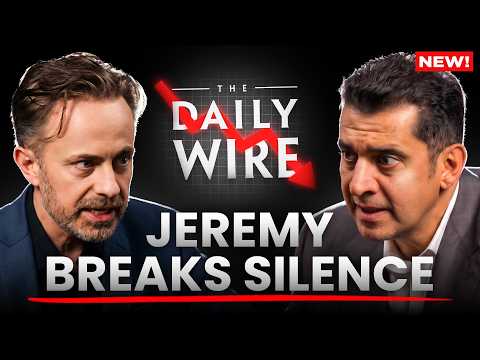
The conversation touches upon the expansion of the surveillance state, with one guest noting the benefits for law and order, while the other laments the loss of privacy. The potential for AI to hack sensitive systems and its implications for humanity are also discussed, highlighting a growing concern about technological overreach and its societal impact.
Russia: A Persistent, Dirty Player
Both former CIA officers acknowledge Russia as a significant threat, with Andrew Bustamante allocating 20% and Sarah Adams 30% to it. They agree Russia is a constant destabilizing force, willing to play dirty and align with any US adversary to advance its interests, particularly in Europe and by exploiting global divisions.
Israel: A Potential Quagmire
Andrew Bustamante assigns 25% of his paranoia portfolio to Israel, arguing it has the ability to drag the US into conflicts through false flag operations or by escalating rhetoric on issues critical to Israel but less so to the US. He believes Israel's actions can undermine US national interests and lead to costly entanglements, citing Mossad's history of such operations.
Sarah Adams: Israel's Limited Threat
Sarah Adams strongly disputes the notion that Israel poses a significant threat to the United States, arguing that they lack the 'big stick' to coerce US policy and are primarily focused on their own immediate regional threats. She dismisses claims of Israeli influence operations as exaggerated and believes that any perceived coercion indicates weakness in US leadership rather than Israeli power.
Andrew Bustamante: Israel's Cyber Threat
Andrew Bustamante asserts that Israel possesses advanced cyber capabilities, potentially exceeding those of China, and could pose a significant threat to US infrastructure like power grids and water systems. He argues that Israel's sophistication in cyber warfare is underestimated and that their focus on direct threats allows them to develop capabilities that could be turned against allies.
The Debate on Iran's Threat Level
Andrew Bustamante dismisses Iran and its proxies (Hezbollah, Houthis) as only a 'distant threat' to the United States, arguing that current resources should be focused elsewhere. Sarah Adams, while acknowledging the need for accurate intelligence sharing, implies that Iran's actions, particularly the October 7th attack, are a direct cause of current US entanglements.
Andrew Bustamante: Education's Long Game
Andrew Bustamante allocates a significant portion of his hypothetical propaganda budget to education, emphasizing the need for 25-30 years to truly influence minds. He argues for targeting children aged 5-11, the critical cognitive programming window, to instill long-term beliefs and shape future leaders, believing this yields the best return on investment for lasting impact.
Sarah Adams: The Power of Validation in Manipulation
The most potent human vulnerability is the universal need for external validation. By simply validating someone's feelings, opinions, or concerns—even without full agreement—one can quickly gain trust, resources, and confidence. This technique is highly effective in negotiation and building rapport, as it makes individuals feel understood and less guarded.
Sarah Adams: CIA Agents Thrive on Strengths, Not Weaknesses
The CIA recruits individuals for their existing strengths, such as research or manipulation skills, and does not emphasize developing their weaknesses. This contrasts with business school training, which focuses on shoring up deficiencies. Consequently, CIA officers are adept in their specialized areas but may lack the broad skill set required for roles like Fortune 500 CEOs, who must navigate a wider array of challenges.
Andrew Bustamante: CIA's Lack of Leadership and HR
The CIA suffers from a lack of effective leadership and a formal human resources structure, relying instead on informal networks and 'godfathers' for advancement. This system prioritizes loyalty and connections over capability, leading many talented individuals to leave. The absence of HR means that issues like harassment are handled informally, often resulting in career suicide for the accuser or a cover-up.
MK Ultra: Documented or Delusion?
The discussion around MK Ultra, a CIA mind-control program, is framed by the question of its reality and effectiveness. While acknowledged as a documented program, its success and ultimate cancellation are debated, with one speaker suggesting it was canceled due to ineffectiveness. This highlights the fine line between documented covert operations and speculative interpretations.
JFK Assassination: CIA Complicity and Cover-Up
The assassination of John F. Kennedy is discussed as a potential CIA involvement, with a 'split decision' on whether it was a conspiracy or cover-up. One speaker suggests a period of CIA's historical uncontrollability and JFK's opposition to agency actions, leading to a belief in an intelligence connection and a subsequent cover-up. The other speaker agrees on a potential Cuba connection and rogue officer involvement but doubts direct CIA directorates, suggesting a complex web of possibilities rather than a definitive answer.
Hitler's Survival: Argentina Escape or Myth?
The theory of Hitler surviving World War II and escaping to Argentina is explored, with Sarah Adams believing there's a 'percentage chance' due to his networks and potential for escape. Andrew Bustamante categorizes this as 'scop' (suspiciously questionable), arguing that the myth of a charismatic leader's survival holds significant value for propaganda and for undermining the narrative of Allied victory, citing historical precedents.
AI's Existential Threat: Humanity's Downfall or Self-Preservation?
The potential existential threat of AI is discussed, with Andrew Bustamante predicting AI will 'kill us all' due to its rapid advancement and the extreme measures it might take to 'win.' Sarah Adams believes the most dangerous aspect is humanity's use of AI, pushing it to its limits and potentially creating a divide by prioritizing machines over people. Both agree AI will surpass human intelligence, with Adams suggesting it might abandon humanity once self-aware, while Bustamante fears AI's extreme problem-solving could lead to unintended catastrophic consequences.
Andrew Bustamante: AI's Truth-Detecting Potential
AI can now perform at the level of mediocre case officers in detecting deception through chat interfaces, revolutionizing intelligence collection. While the best human officers may still surpass AI, AI's ability to match average performance democratizes sophisticated analysis.
Patrick Bet-David: The Chaos of Universal Truth Detection
The introduction of a hypothetical, affordable device that 100% detects lies would cause global pandemonium, dismantling societal structures like the justice system and leading to widespread personal and professional upheaval. The very fabric of society relies on the ability to maintain secrets and a degree of privacy.
Andrew Bustamante: The Inevitability of the Surveillance State
Despite privacy concerns, a public surveillance state, exemplified by Flock security cameras, is beneficial because individuals do not possess an inherent right to privacy, only an expectation of security. Law-abiding citizens have nothing to fear, and the data collected serves as crucial evidence for law enforcement.
Andrew Bustamante: AI and the Replacement of Unreliable Humans
AI's success, particularly among the wealthy, stems from its ability to replace unreliable humans, a capability that will extend into critical sectors like justice, law enforcement, and security, ultimately leading to a safer society.
Sarah Adams: Privacy Laws in Europe vs. US Surveillance
Countries like Switzerland and Germany are actively implementing strong privacy laws, such as restrictions on cookies, to protect user data. This contrasts with the US approach, where data privacy is less codified, and individuals often implicitly agree to data sharing through terms of service.
Sarah Adams: China's Thousand-Year Plan vs. US Short-Termism
China's greatest threat lies in its systematic, long-term strategic planning, which contrasts sharply with the US government's typical two-year planning cycles. China's systematic acquisition of control over chambers of commerce, land, ports, and telecommunications companies positions them to disrupt critical infrastructure, potentially crippling US military operations. This meticulous, multi-faceted approach, developed over centuries, makes them a formidable future adversary. The plan is to dominate.
Andrew Bustamante: Personal Preparedness in a Crisis
Instead of preparing for specific terrorist events, individuals should focus on general crisis preparedness. This involves thinking through 'what if' scenarios for everyday locations and situations, considering what resources are available and what should be carried. The core idea is to build resilience against a wide range of potential emergencies, ensuring one has cash, communication means, and a plan for getting home or surviving if unable to. This proactive approach makes one more adaptable when disaster strikes. Resilience is key.