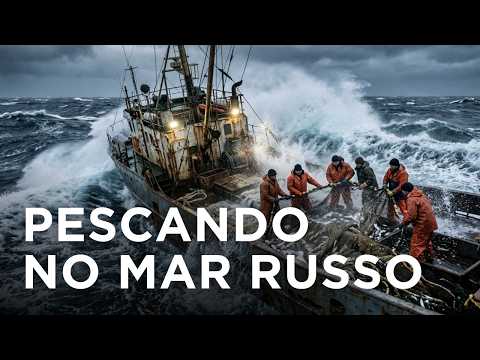
Anatomia do monstro's Sobrevivendo no Mar de Okhotsk: A Vida dos Pescadores do Ártico Russo: skim's analysis identifies 12 key moments. Commercial fishermen aboard the trawler Kalinovka navigate months of isolation, mechanical risk, and volatile catch yields in the Russian Far East.
Category: Science. Format: Documentary. YouTube video analyzed by skim.
skim AI Analysis
Credibility assessment: Firsthand Maritime Accounts. The documentary relies entirely on direct access to the fishing vessel Kalinovka, featuring on-camera testimony from the captain, engineers, apprentices, and shore-based families detailing specific operational and economic realities.
Bias assessment: Observational Human Focus. The narrative presents an empathetic yet unromanticized portrayal of commercial fishing, balancing personal sacrifices, financial precarity, and severe physical hazards without corporate or ideological spin.
Originality: 84% — Immersive Field Access. Provides rare observational coverage inside the engine rooms, deck operations, and domestic households of Far East Russian saury fishermen working extended multi-month shifts.
Depth: 80% — Structural & Human Analysis. Examines operational dynamics, mechanical vulnerabilities, catch unpredictability, financial remuneration structures, and psychological tolls on families during extended deployments.
Key Points (12)
1. Industrial fishing anchors the Russian Far East
Timestamp: 00:01:07 to 00:03:27
Commercial fishing serves as the economic foundation of coastal communities across the Russian Far East, where over half the population in ports like Vladivostok is connected to the maritime sector. The deployment of vessels like the Kalinovka marks the start of rigorous multi-month voyages. These operations sustain entire regional settlements that would not exist without the fleet.
Significance (Medium): Highlights how extreme remote settlements depend structurally on high-risk industrial fishing operations.
Sources in support: Nikolai Gravinov (Captain of the fishing vessel Kalinovka)
2. Captain Gravinov leads through trust and retention
Timestamp: 00:03:28 to 00:05:44
Captain Nikolai Gravinov commands exceptional crew loyalty through decades of hands-on leadership and equitable crew relations. His wife notes that he has worked continuously for 14 years without formal vacations, creating a culture where deckhands can speak openly. This mutual respect keeps crew turnover remarkably low in an industry plagued by attrition.
Significance (Medium): Demonstrates that empathetic, non-hierarchical leadership is vital for maintaining crew cohesion during months of isolated sea duty.
Sources in support: Nikolai Gravinov (Captain of the fishing vessel Kalinovka)
3. The speaker trades music for maritime wages
Timestamp: 00:05:45 to 00:08:47
First-time trainee the speaker enters the fishing fleet seeking higher financial compensation and artistic inspiration despite leaving behind a young family. Navigating the ship interior with senior mechanics, he confronts the stark reality of living in close quarters offshore. The economic necessity of providing for his infant daughter overrides the romantic notions of sea voyages.
Significance (Medium): Exposes the economic push factors that compel young parents and creative professionals to accept grueling maritime contracts.
Sources in support: YouTube: Anatomia do monstro
4. Engine room integrity prevents catastrophic capsizing
Timestamp: 00:09:51 to 00:12:10
Third Engineer the speaker maintains continuous engine operations in punishing 40-degree Celsius mechanical compartments. He stresses that an engine failure during heavy storms leaves the vessel powerless against rolling swells, risking total capsize. Constant mechanical vigilance is the sole barrier preventing severe maritime disasters at sea.
Significance (High): Underlines the absolute mechanical dependency of trawlers operating in unforgiving sub-polar weather systems.
Sources in support: YouTube: Anatomia do monstro
5. Night light arrays guide complex saury trapping
Timestamp: 00:13:22 to 00:15:37
The crew deploys powerful projector beams to lure migrating saury schools directly alongside the hull under cover of darkness. Once the school consolidates beneath the vessel, operators switch to red lighting to disorient and trap the fish inside manual lift nets. This intricate optical technique transforms night fishing into an intensive, synchronized choreography.
Significance (Medium): Illustrates the specialized behavioral harvesting methods developed specifically for pelagic saury fishing in sub-Arctic waters.
Sources in support: Nikolai Gravinov (Captain of the fishing vessel Kalinovka)
6. Water temperatures and storms disrupt catch yields
Timestamp: 00:15:38 to 00:17:52
Initial netting attempts yield minimal returns because cold water temperatures between 12 and 15 degrees Celsius cause the saury to ignore surface light arrays. Approaching Pacific storms force the Kalinovka to halt operations and drop anchor in Shikotan Bay. Such delays underscore the sheer unpredictability of commercial fishing where profit is dictated by ocean conditions.
Significance (Medium): Highlights how environmental volatility directly impedes productivity and increases operational downtime.
Sources in support: Nikolai Gravinov (Captain of the fishing vessel Kalinovka)
7. Net specialists shoulder immense physical demands
Timestamp: 00:20:12 to 00:22:20
Veteran gear specialist the speaker explains that locating fish is futile if trawl nets are improperly rigged, weighted, or handled. Crew members repeatedly haul heavy saury traps by hand alongside winches through all hours of the night. This grueling labor causes persistent physical pain, yet seasoned workers remain committed to the fleet over land-based jobs.
Significance (Medium): Demonstrates the irreplaceable value of specialized trade craftsmanship in heavy industrial fishing operations.
Sources in support: YouTube: Anatomia do monstro
8. Marine predators raid nets and damage equipment
Timestamp: 00:26:04 to 00:28:12
When schools of saury gather under the trawler's illumination, apex predators including sharks, whales, and seals are drawn to the feeding zone. These larger animals scatter the fish and tear through netting, forcing deckhands to perform emergency net repairs. The presence of predators frequently cuts lucrative netting runs short.
Significance (Medium): Shows how marine wildlife interactions cause direct gear destruction and harvest loss for commercial trawlers.
Sources in support: Nikolai Gravinov (Captain of the fishing vessel Kalinovka)
9. Veteran sailors steer children toward civil careers
Timestamp: 00:28:34 to 00:30:50
Longtime deckhand the speaker and his family reflect on the emotional wounds caused by decades of prolonged separation during his sea deployments. His son Bogdan, an accomplished martial arts cadet, recalls resenting the sea for keeping his father away during his childhood. As a result, Eduard actively discourages his son from maritime labor, preferring stable government service.
Significance (High): Reveals an intergenerational shift where veteran fishermen seek public sector security for their offspring rather than continuing maritime traditions.
Sources in support: YouTube: Anatomia do monstro
10. Satellite links soften the pain of isolation
Timestamp: 00:31:10 to 00:33:32
While historic voyages had zero communication channels with the mainland, modern trawlers utilize satellite phone and messaging terminals managed by radio operators. Even basic text exchanges offer vital reassurance to young spouses coping alone on shore with infant children. Nevertheless, the rigid schedules and high costs of satellite connectivity maintain a sharp barrier between home and sea.
Significance (Low): Examines how modern telecommunications provide emotional lifelines while failing to erase the fundamental hardship of multi-month absence.
Sources in support: YouTube: Anatomia do monstro
11. Galley routines maintain offshore crew morale
Timestamp: 00:35:43 to 00:37:51
Ship cook Victor prepares meals for the 20-man crew, securing galley equipment against turbulent sea rolls and baking fresh bread daily. Crew members rely on shared meals and celebrations in the mess hall to maintain social solidarity throughout grueling shifts. High offshore wages motivate workers from distant inland regions like Belgorod to undertake these seasonal deployments.
Significance (Low): Highlights the essential logistical and psychological function of food service in maintaining crew performance during harsh deployments.
Sources in support: YouTube: Anatomia do monstro
12. Sonar tracking triggers massive night hauls
Timestamp: 00:38:52 to 00:41:18
Using directional acoustic sonar to locate sub-surface saury schools, the bridge navigates the ship directly above massive biomass concentrations. A successful net deployment brings thousands of leaping fish aboard via powerful hydraulic pumps, instantly lifting crew morale. Because compensation is pegged strictly to tonnage, substantial catches validate the intense hazards of the voyage.
Significance (High): Demonstrates how acoustic technology and incentive-based pay align to drive high-intensity industrial harvesting.
Sources in support: Nikolai Gravinov (Captain of the fishing vessel Kalinovka)
This analysis was generated by skim (skim.plus), an AI-powered content analysis platform by Credible AI. Scores and classifications represent the platform's AI-generated assessment and should be considered alongside other sources.