Olivia Wilde describes her upbringing as being immersed in a constant 'salon' environment due to her parents' careers as war correspondents. This approach, where children were taken seriously and included in adult conversations, bridged the gap between their demanding professions and home life, fostering a sense of connection and respect. Wilde emphasizes the importance of parents modeling their social lives for their children, allowing them to learn social skills through observation.
Boarding School as a Sanctuary
Sent to boarding school due to her rebellious nature and desire for independence, Olivia Wilde found an unexpected sanctuary in its strong theater department. This environment, with its professional-level facilities and opportunities for student production, provided an outlet for her creativity and a sense of belonging that she felt was missing in her earlier schooling. She contrasts this with her previous school's limited theater facilities, highlighting how Andover offered a college-like experience.
The Lost Art of Disagreement
Olivia Wilde and Dax Shepard lament the societal decline in the skill of constructive disagreement, proposing 'debate dinners' as a solution. The concept involves assigning participants a stance, potentially one they don't agree with, to argue rigorously. This exercise aims to rebuild the muscle for respectful debate, fostering empathy and understanding by forcing individuals to engage with opposing viewpoints without emotional reactivity.
Parenting as a Training Ground
Wilde views arguments with her children not as defiance, but as a crucial training ground for developing their debating and arguing skills for the outside world. She encourages them to make better arguments, seeing it as a way to prepare them for future conflicts and disagreements. This contrasts with a 'don't talk back' approach, emphasizing the value of teaching children how to engage in discourse constructively.
Dax Shepard's Father-Son Trip
Dax Shepard recounts a highly positive solo trip with his son, Otis, to Japan. He describes it as the 'best week of my life,' realizing that some activities were chosen specifically for his own enjoyment, highlighting a delightful aspect of parent-child bonding that can occur when focused on shared experiences.
Dax Shepard: The Unexpected Joys of Motherhood
Olivia Wilde expresses profound surprise at how enjoyable and fulfilling motherhood has been, far exceeding her expectations. She initially knew she wanted children but didn't anticipate the depth of the friendship and fun it would bring. Each stage of her children's lives brings new joys, and she cherishes the deep, profound, and fun friendship that has developed. This experience has humbled her completely, revealing capacities for love, patience, empathy, and selflessness she didn't know she possessed, ultimately making her a better person.
Olivia Wilde: From Casting Intern to 'The OC'
Wilde shares her early career path, starting as a casting intern for Mali Finn, observing the industry from the ground up. She then landed a role on 'The OC,' initially pitched as a bartender, which unexpectedly became a significant part of her career. She admits to not realizing the show's immense popularity until after the first episode aired, leading to a rapid understanding of the pressures of fame. This experience taught her about the industry's dynamics and the rapid ascent to public recognition.
Olivia Wilde: The 'House' Experience and Hugh Laurie
Joining the cast of 'House' was a significant career move for Olivia Wilde, expanding her reach globally. She describes Hugh Laurie as incredibly smart, gracious, and 'smitten-worthy,' learning a great deal from him. Laurie's analogy of acting with an accent being like 'playing with a salmon' versus a 'tennis racket' perfectly captured the challenge. Wilde valued the experience and the camaraderie, though the demanding schedule eventually led her to pursue other opportunities.
Olivia Wilde: The Unpredictable Nature of Hollywood Success
Wilde discusses the unpredictable nature of Hollywood, citing 'Cowboys & Aliens' and 'Tron' as examples of projects with high expectations that didn't meet box office predictions. She emphasizes that 'nobody knows anything' in the industry and that it's crucial to love the experience of making the project itself. The fun she had on 'Cowboys & Aliens,' riding horses with stars like Harrison Ford and Daniel Craig, and her friendship with Sam Rockwell, exemplifies this philosophy. This perspective highlights resilience and finding value beyond commercial success.
Olivia Wilde: The 'Don't Worry Darling' Narrative
Olivia Wilde expresses frustration with the media's focus on fabricated drama surrounding 'Don't Worry Darling,' stating that the crew wrote a letter refuting the negative press. She laments that the narrative overshadowed discussions about the actual film, which the crew was proud of. Wilde likens tabloid sensationalism to 'junk food' that people consume despite knowing it's unhealthy.
Olivia Wilde: The Premise of 'The Invite'
Olivia Wilde introduces her film 'The Invite,' which begins with an Oscar Wilde quote about marriage. She explains that the movie is both romantic and cynical, exploring a couple's relationship that has fallen into resentment and a lack of communication, with each partner blaming the other for their unhappiness. The film's premise is that of a couple whose marriage is falling apart, and they are visited by their neighbors.
Olivia Wilde: Directing 'The Invite' with a Unique Process
Wilde details her unconventional approach to directing 'The Invite,' which involved shooting in order, on film, and workshopping the script extensively with the cast and writers before and during filming. This method fostered a high-intensity, collaborative environment where the crew became deeply invested in the unfolding narrative.
Olivia Wilde: The Art of Speechlessness in Relationships
Wilde discusses how the resolution of conflict in 'The Invite' is conveyed through speechlessness rather than overt arguments, suggesting that when partners can no longer articulate their issues, it signifies a profound breakdown. This 'pause on the battlefield' indicates resignation and the end of engagement, a more devastating outcome than active fighting.
Olivia Wilde: Edward Norton's Improvised Backstory
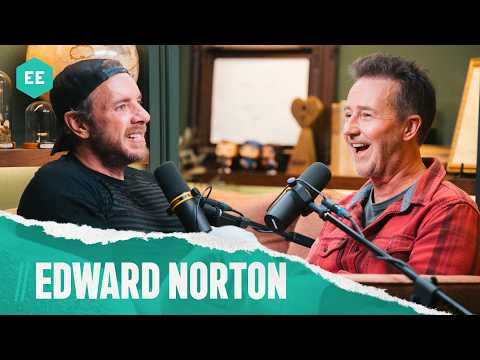
Wilde recounts a pivotal moment where Edward Norton spontaneously improvised a powerful backstory for his character during filming, without prior rehearsal. She chose to hear it for the first time on camera to capture genuine reactions, a decision that resulted in one of her favorite scenes and demonstrated the cast's deep commitment and talent.
Olivia Wilde: Penelope Cruz's Transformation and Esther Perel's Influence
Wilde praises Penelope Cruz's ability to transform into her character, noting she is unlike her real self. She reveals that Cruz worked closely with therapist Esther Perel, whose philosophies on relationships, particularly the idea of re-introducing oneself to a partner and the possibility of a new relationship with the same person, became central to the film's themes. Perel's book 'Mating in Captivity' and her podcast are highlighted as essential resources.
Dax Shepard & Olivia Wilde: The Convenience of Resentment
Wilde and Shepard discuss how resentment can be a convenient way to avoid personal responsibility in relationships, allowing individuals to blame their partner for their own unhappiness. Letting go of this resentment requires courage and a willingness to acknowledge one's own agency and role in the relationship dynamic.
Olivia Wilde: The Nuances of AI Relationships
Wilde touches upon the concept of relationships with AI, referencing Spike Jonze's film and Esther Perel's podcast episode on the topic. She notes Perel's observation that while people can live without sex, they cannot live without touch, and her open-minded approach to exploring these evolving forms of connection.
Dax Shepard: The Romantic Power of 'Okay'
Dax Shepard recounts how the movie 'Eternal Sunshine of the Spotless Mind' profoundly affected him after a breakup. He was struck by the simple exchange where the female character says she'll do something, and he'll get annoyed, and she'll do something else, and he'll do that, to which he simply replies, 'Okay.' Shepard realized he could have just accepted and honored his ex-partner's actions, lamenting that he hadn't simply said 'Okay' to avoid further conflict and perhaps preserve the relationship's genuineness.
Dax Shepard: The Value of 'Rupture and Repair'
Shepard emphasizes that conflict itself isn't the problem in relationships, but rather the inability to be honest about it and resolve it. He uses the concept of 'rupture and repair' to illustrate that happy relationships aren't defined by the absence of fights, but by how effectively partners recover from them. This involves honest communication, avoiding resentment, and not harboring secrets, ensuring that the relationship can withstand challenges and emerge stronger.
Olivia Wilde: Recognizing Partners as Whole Individuals
Wilde articulates a core message from her film: the importance of recognizing partners as whole, separate individuals, rather than as extensions of oneself or as someone who completes oneself. She questions whether one is blaming their partner for their own unhappiness and encourages self-reflection on personal fulfillment. This perspective challenges the codependent model of relationships, advocating for mutual respect for individuality and autonomy as foundational to a healthy partnership.