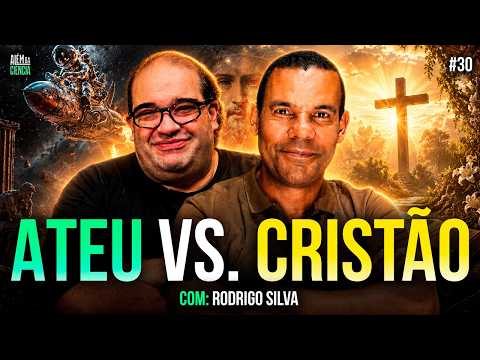
Além da Ciência - Sérgio Sacani's DEUS EXISTE? SÉRGIO SACANI E RODRIGO SILVA DEBATEM CIÊNCIA, FÉ e CONHECIMENTO | Além da Ciência 30: skim's analysis identifies 24 key moments, with 2 potential conflicts of interest flagged. Archaeologist Rodrigo Silva and host Sérgio Sacani engage in an extensive dialogue examining the intersection of scientific methodology, biblical archaeology, and religious faith.
Category: Education. Format: Debate. YouTube video analyzed by skim.
Key Points (24)
1. Dead Sea Scrolls AI Dating
Timestamp: 00:05:03 to 00:09:53
Recent advances in radiocarbon calibration and artificial intelligence models have pushed back the physical dating of several Dead Sea Scrolls. This algorithmic analysis suggests certain textual copies are significantly older than previously assumed. This development fundamentally shifts the epigraphic baseline for biblical manuscript studies.
Significance (High): Refines manuscript chronology by combining biochemical data with computational epigraphy.
Sources in support: Rodrigo Silva (Archaeologist and Professor of Theology)
Neutral sources: Sérgio Sacani (Host and Science Communicator)
2. Daniel Chronology and Predictive Prophecy
Timestamp: 00:09:55 to 00:13:55
Academic critics commonly date the Book of Daniel to 165 BC to classify its historical accuracy as vaticinium ex eventu written during the Maccabean revolt. However, physical fragments dating between 250 BC and 165 BC challenge the assumption that the text was composed after the events it recounts. This chronological shift undermines the standard minimalist explanation for the manuscript.
Significance (Medium): Questions conventional critical assumptions regarding the post-facto composition of prophetic literature.
Sources in support: Rodrigo Silva (Archaeologist and Professor of Theology)
Neutral sources: Sérgio Sacani (Host and Science Communicator)
3. Newton and Ancient Prophetic Texts
Timestamp: 00:13:58 to 00:18:18
Isaac Newton dedicated a substantial portion of his academic writings to theological chronology and prophetic books rather than pure physics. Newton analyzed mathematical descriptions in Daniel and the Apocalypse to correlate imperial succession and ancient historical timelines. His scholarly obsession illustrates that scientific pioneerism historically coexisted with deep theological inquiry.
Significance (Medium): Demonstrates the historical intersection of mathematical rigor and biblical exegesis during the Scientific Revolution.
Sources in support: Rodrigo Silva (Archaeologist and Professor of Theology)
Neutral sources: Sérgio Sacani (Host and Science Communicator)
4. Epigraphic Evidence for House of David
Timestamp: 00:19:08 to 00:24:18
Minimalist historical models long argued that King David was purely mythological due to a lack of monumental inscriptions. The discovery of the Tel Dan Stele and subsequent multispectral re-evaluations of the Mesha Stele provided concrete non-biblical mentions of the House of David. These physical findings forced secular scholarship to abandon the total myth hypothesis.
Significance (High): Overturns extreme historical skepticism regarding the existence of the United Monarchy in Judah.
Sources in support: Rodrigo Silva (Archaeologist and Professor of Theology)
Neutral sources: Sérgio Sacani (Host and Science Communicator)
5. Lachish Excavations and Kingdom Borders
Timestamp: 00:24:20 to 00:28:20
Ongoing archaeological excavations at the ancient city of Tel Lachish focus on mapping the administrative reach of the Judahite monarchy. Radiocarbon dating of mortar within defensive fortifications matches the biblical timeframe of the tenth century BC. These stratigraphic excavations systematically establish the geographic boundaries of ancient Judean statehood.
Significance (Medium): Supplies empirical stratigraphic evidence for fortified provincial towns under tenth-century Judahite administration.
Sources in support: Rodrigo Silva (Archaeologist and Professor of Theology)
Neutral sources: Sérgio Sacani (Host and Science Communicator)
6. Cosmological Hypotheses and Agnosticism
Timestamp: 00:28:25 to 00:33:15
Modern astrophysics maintains several competing mathematical models regarding the universe prior to the Planck epoch. Asserting dogmatic certitude about conditions before the Big Bang exceeds current empirical verification capabilities. Maintaining intellectual humility requires acknowledging the boundaries between proven empirical facts and theoretical constructs.
Significance (Medium): Highlights the epistemological boundaries between empirical observational astronomy and theoretical physics.
Sources in support: Rodrigo Silva (Archaeologist and Professor of Theology), Sérgio Sacani (Host and Science Communicator)
7. Historicity Demand in Biblical Religion
Timestamp: 00:36:30 to 00:41:30
Unlike many mythological and religious epics that function independently of physical geography, biblical theology is intrinsically tethered to historical claims. If the underlying events and persons described in biblical narratives are disproven, the theology itself collapses. This unique vulnerability makes biblical archaeology a critical discipline for religious analysis.
Significance (Medium): Clarifies why biblical texts face unique archaeological scrutiny compared to other ancient literature.
Sources in support: Rodrigo Silva (Archaeologist and Professor of Theology)
Neutral sources: Sérgio Sacani (Host and Science Communicator)
8. Psychological Dimensions of Skepticism
Timestamp: 00:45:10 to 00:50:35
Personal psychological experiences, particularly paternal relationships and trauma, frequently inform philosophical worldviews and religious skepticism. Thinkers like Sigmund Freud developed psychological models influenced by personal familial grievances and cultural environments. Understanding human motivations reveals that skepticism and faith are rarely purely intellectual deductions.
Significance (Medium): Explores the psychological and existential factors behind ideological positions.
Sources in support: Rodrigo Silva (Archaeologist and Professor of Theology)
Neutral sources: Sérgio Sacani (Host and Science Communicator)
9. Methodological Hermeneutics vs Literalism
Timestamp: 00:50:35 to 00:56:05
Studying ancient religious texts requires rigorous philological, cultural, and historical context rather than fundamentalist literalism. Texts directed at Bronze Age audiences used pedagogical metaphors that modern readers frequently misinterpret as simplistic science. Scholarly exegesis separates permanent ethical principles from temporal cultural applications.
Significance (High): Establishes an intellectual framework for interpreting religious literature without anti-scientific dogmatism.
Sources in support: Rodrigo Silva (Archaeologist and Professor of Theology)
Neutral sources: Sérgio Sacani (Host and Science Communicator)
10. Ancient Attestations of Historical Figures
Timestamp: 00:58:30 to 01:03:00
Surviving non-biblical documentary evidence for first-century figures like Jesus compares favorably to documentary evidence for classical figures like Alexander the Great. Ancient writings from Flavius Josephus, Tacitus, Suetonius, and Pliny the Younger provide contemporary external attestations. Textual loss across antiquity requires historians to evaluate available evidence proportionally.
Significance (Medium): Puts ancient documentary density into realistic historiographical perspective.
Sources in support: Rodrigo Silva (Archaeologist and Professor of Theology)
Neutral sources: Sérgio Sacani (Host and Science Communicator)
11. Exploitative Religious Practices Critiqued
Timestamp: 01:04:10 to 01:08:10
Commercialized religious practices that manipulate human vulnerability and grief for financial enrichment distort ethical theology. Academic education and structured ministry require transparent ethical boundaries to prevent abusive guru dynamics. Both secular observers and genuine believers must condemn predatory spiritual monetization.
Significance (Medium): Denounces manipulative religious mercantilism from an insider theological perspective.
Sources in support: Rodrigo Silva (Archaeologist and Professor of Theology), Sérgio Sacani (Host and Science Communicator)
12. The Problem of Evil and Suffering
Timestamp: 01:11:00 to 01:17:00
Human tragedies such as childhood illness and natural disasters create legitimate philosophical tensions for theistic worldviews. In classical theodicy, an interrupted or chaotic universe is the consequence of granted free will and moral disruption rather than direct divine sadism. Ultimate theological resolution depends on future restoration rather than temporary earthly immunity.
Significance (High): Articulates classical theodicies regarding the coexistence of an omnipotent deity and pervasive natural evil.
Sources in support: Rodrigo Silva (Archaeologist and Professor of Theology)
Neutral sources: Sérgio Sacani (Host and Science Communicator)
13. Provisional Nature of Earthly Miracles
Timestamp: 01:18:00 to 01:22:30
Miracles recorded in religious texts serve as temporary signs and samples of restoration rather than permanent eliminations of mortal decay. Healing a terminal patient temporarily delays physical death without altering the baseline biological condition of the mortal world. Treating provisional events as permanent solutions misunderstands the eschatological framework of scripture.
Significance (Medium): Examines theological eschatology regarding physical mortality and divine interventions.
Sources in support: Rodrigo Silva (Archaeologist and Professor of Theology)
Neutral sources: Sérgio Sacani (Host and Science Communicator)
14. Existential Meaning and Teleological Senses
Timestamp: 01:27:00 to 01:32:10
Purely reductive naturalism reduces human conscious existence to an accidental biological accident destined for total annihilation. The innate human longing for permanence, justice, and transcendent meaning functions like a biological sense that anticipates an objective reality. Existential satisfaction and moral responsibility align closely with teleological purpose.
Significance (Medium): Articulates teleological and existential arguments for transcendent purpose.
Sources in support: Rodrigo Silva (Archaeologist and Professor of Theology)
Neutral sources: Sérgio Sacani (Host and Science Communicator)
15. First Cause Cosmological Arguments
Timestamp: 01:39:35 to 01:44:55
The origin of the physical cosmos demands philosophical accounting for how matter, energy, space, and time emerged. Secular and religious frameworks both face foundational mysteries when addressing why existence exists rather than nothingness. A non-material uncaused cause remains a coherent philosophical proposal alongside physical cosmological models.
Significance (High): Framing the cosmological argument within contemporary physics and classical metaphysics.
Sources in support: Rodrigo Silva (Archaeologist and Professor of Theology)
Neutral sources: Sérgio Sacani (Host and Science Communicator)
16. Physical-Contextual Hermeneutic Framework
Timestamp: 01:47:30 to 01:52:00
Reading ancient Near Eastern documents requires understanding the material conditions, geography, idioms, and legal systems of that era. Ignoring the historical milieu produces anachronistic moral judgments that misrepresent ancient cultural codes. Physical contextual theology embeds texts in their real historical soil before extracting moral principles.
Significance (Medium): Advocates for contextual historical scholarship over simplistic modern anachronisms.
Sources in support: Rodrigo Silva (Archaeologist and Professor of Theology)
Neutral sources: Sérgio Sacani (Host and Science Communicator)
17. Apocryphal Texts and Hellenistic Myth
Timestamp: 01:56:40 to 02:01:20
Second- and third-century apocryphal gospels emerged largely to cater to Hellenistic appetites for mythological superhero origin stories. Unlike the canonical narratives that pass over the youth of Jesus in silence, apocrypha invent flamboyant childhood miracles. Textual criticism separates these fanciful late folklore inventions from early documentary accounts.
Significance (Medium): Clarifies the literary and chronological distinctions between canonical and apocryphal gospels.
Sources in support: Rodrigo Silva (Archaeologist and Professor of Theology)
Neutral sources: Sérgio Sacani (Host and Science Communicator)
18. Aquinas on Essence and Existence
Timestamp: 02:01:25 to 02:05:55
Thomas Aquinas integrated Aristotelian metaphysics to differentiate the underlying essence of an entity from its changing accidental properties. In Thomistic philosophy, physical materials and biological forms continuously shift while the foundational ground of being remains sustained by transcendent reality. This metaphysical approach frames God not as an object among objects, but as Being itself.
Significance (Medium): Explains classical Thomistic metaphysics and ontological arguments.
Sources in support: Rodrigo Silva (Archaeologist and Professor of Theology)
Neutral sources: Sérgio Sacani (Host and Science Communicator)
19. Artificial Intelligence and Human Worship
Timestamp: 02:14:40 to 02:19:00
The rapid ascent of advanced artificial intelligence creates subtle societal hazards regarding human hubris and synthetic authority. The primary cultural danger is not that machines will demand worship, but that creators will succumb to the ancient temptation to view themselves as autonomous deities. Technocentrism risks resurrecting archaic authoritarian and guru dynamics under digital guises.
Significance (Medium): Examines ethical and spiritual ramifications of unchecked technological advancement.
Sources in support: Rodrigo Silva (Archaeologist and Professor of Theology), Sérgio Sacani (Host and Science Communicator)
20. Divine Wrath as Cosmic Justice
Timestamp: 02:23:45 to 02:28:15
Scriptural depictions of divine wrath represent systematic moral justice rather than petty emotional temper tantrums. Both Old and New Testament passages balance extensive statements of compassionate grace with strict accountability for oppression. The tearing of the temple curtain at the crucifixion symbolizes solemn divine mourning for mortal sacrifice.
Significance (Medium): Reinterprets the theological concept of divine anger through the lens of objective moral justice.
Sources in support: Rodrigo Silva (Archaeologist and Professor of Theology)
Neutral sources: Sérgio Sacani (Host and Science Communicator)
21. Post-Biblical Prophets and Evaluation
Timestamp: 02:28:20 to 02:33:10
Belief in continuing spiritual gifts requires rigorous empirical and doctrinal testing rather than gullible acceptance of charismatic claims. Figures like Ellen White contributed valuable historical insights on health and education while remaining subject to foundational biblical authority. Religious movements that elevate modern prophetic figures above canon risk devolving into sectarian cults.
Significance (Medium): Addresses sectarian boundaries and criteria for evaluating modern religious figures.
Sources in support: Rodrigo Silva (Archaeologist and Professor of Theology)
Neutral sources: Sérgio Sacani (Host and Science Communicator)
22. Ancient Astronomical Sophistication
Timestamp: 02:51:30 to 02:56:10
Ancient Near Eastern civilizations demonstrated remarkable observational sophistication in distinguishing planetary wandering from fixed stars. Long before modern telescopic instruments, astronomers tracked the synodic periods of Jupiter and accurately predicted solar eclipses. Conflating ancient astrological ritual with observational incompetence ignores real empirical achievements.
Significance (Medium): Vindicates the observational precision of Babylonian and Greek proto-astronomy.
Sources in support: Rodrigo Silva (Archaeologist and Professor of Theology), Sérgio Sacani (Host and Science Communicator)
23. Archaeological Logistics in Israel
Timestamp: 02:56:15 to 03:00:55
Conducting scientific archaeological digs in Israel requires coordination with academic institutions like the Hebrew University amidst ongoing regional tensions. While protective infrastructure ensures civil safety, thousands of unexcavated tell sites remain vulnerable to erosion and time. Academic excavation operates methodically year by year regardless of geopolitical friction.
Significance (Medium): Details the physical realities, safety measures, and logistics of modern Near Eastern field archaeology.
Sources in support: Rodrigo Silva (Archaeologist and Professor of Theology)
Neutral sources: Sérgio Sacani (Host and Science Communicator)
24. Gnostic Demiurge and Cosmic Proportion
Timestamp: 03:01:00 to 03:06:10
Second-century Gnosticism posited a flawed lesser demiurge to reconcile material defects with a perfect transcendent spirit. In contrast, classical theism views human life as an infinitesimal fraction of cosmic history whose ultimate purpose transcends immediate comprehension. Recognizing intellectual limits encourages philosophical modesty in confronting cosmic mysteries.
Significance (Medium): Contrasts ancient Gnostic cosmology with classical theism and human epistemological limits.
Sources in support: Rodrigo Silva (Archaeologist and Professor of Theology)
Neutral sources: Sérgio Sacani (Host and Science Communicator)
This analysis was generated by skim (skim.plus), an AI-powered content analysis platform by Credible AI. Scores and classifications represent the platform's AI-generated assessment and should be considered alongside other sources.